Restaurant SOP and Training in India: Why Tokyo Chefs Can Grow With Consistency and Strong Kitchen Systems
A restaurant brand becomes successful only when it can deliver the same taste, same portion, same quality and same customer experience every single day. Many restaurants start well during the launch phase, but slowly lose control because staff change, recipes are not followed, portions become inconsistent and kitchen discipline becomes weak. This is why SOPs and training are extremely important in the restaurant business.
Tokyo Chefs is built as a modern Asian fusion brand with Japanese-inspired bowls, Korean fried chicken, Chinese wok dishes, ramen, bao, dimsum and Asian fusion starters. The menu is exciting, but excitement alone is not enough. To grow successfully across different outlets and franchise locations, Tokyo Chefs must be supported by strong standard operating procedures, recipe manuals, training systems and regular audits.
SOP means Standard Operating Procedure. In simple words, it is the written system that explains how every task should be done. In a restaurant, SOPs cover recipe preparation, sauce making, cutting standards, storage methods, cooking process, hygiene practices, packing, service, cleaning, opening checklist, closing checklist and customer handling. Without SOPs, every staff member will work in their own style, and the brand will lose consistency.
For Tokyo Chefs, SOPs are especially important because the menu has multiple Asian fusion categories. Korean fried chicken needs a proper marination process, coating method, frying temperature, sauce tossing style and holding time. Ramen needs standard broth, noodle quantity, toppings, garnish and packing rules. Rice bowls need fixed rice portions, vegetables, protein, sauce and presentation. Bao and dimsum need proper steaming, filling, sauce and packing guidelines. Chinese wok dishes need exact sauce balance, heat control and portioning.
If these systems are not written and trained, the food quality will depend only on individual chefs. This is risky. One chef may make the dish spicy, another may make it sweet, another may add extra sauce, and another may reduce the portion. Customers will quickly notice these changes. A customer who loved a Korean Fried Chicken Rice Bowl once should get the same taste the next time also. This is possible only through SOPs.
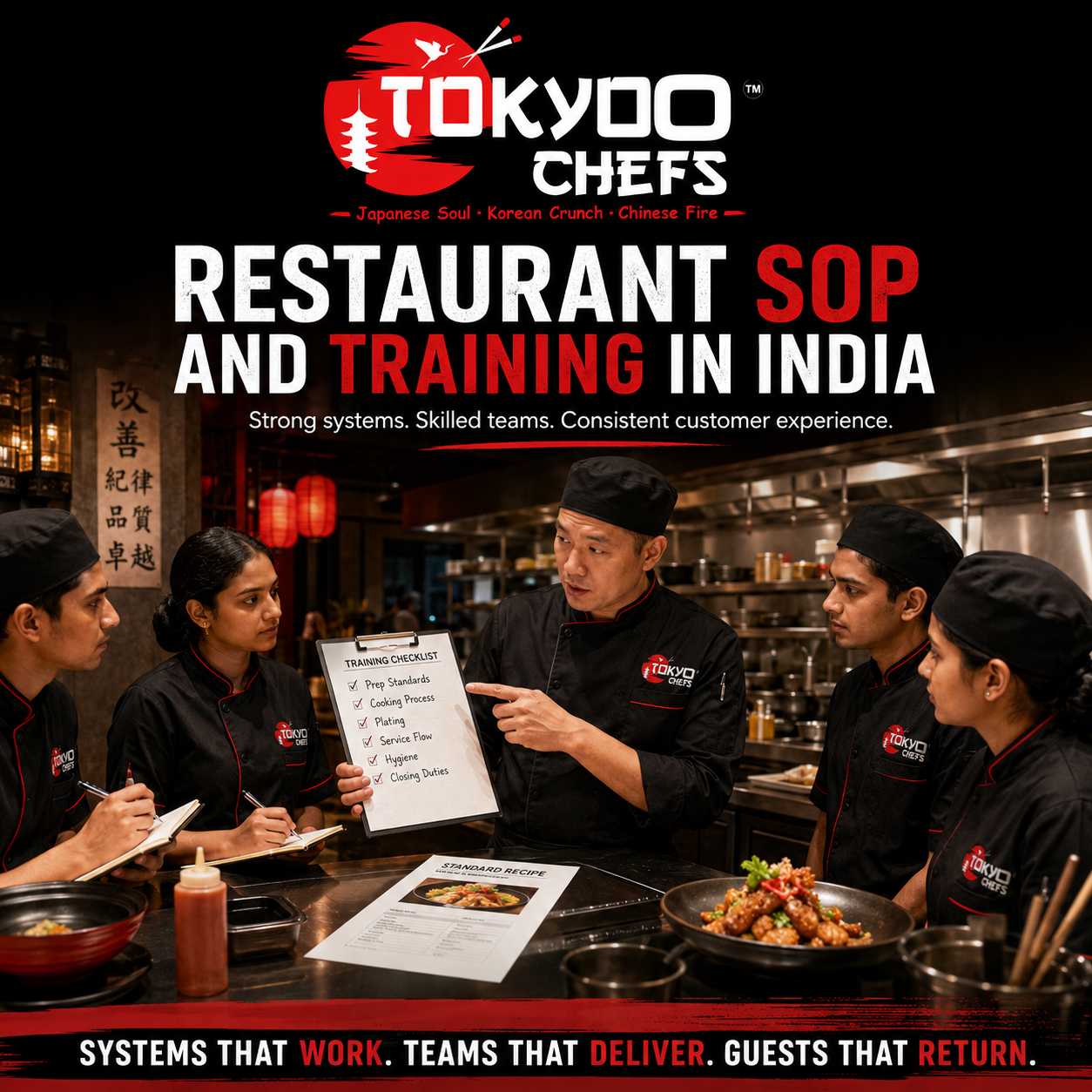
Training is the second important pillar. A written recipe is useful, but staff must be trained to follow it correctly. Training should not happen only once before opening. It should be repeated, monitored and corrected regularly. Kitchen staff must understand why portioning matters, why sauce balance matters, why frying temperature matters and why presentation matters.
In a franchise model, training becomes even more important. A franchise partner may invest in the outlet, but the brand reputation depends on daily execution. If one outlet serves poor food, it can affect the overall brand image. Tokyo Chefs must make sure every franchise outlet follows the same systems from day one.
Pre-opening training should cover complete kitchen operations. Staff should learn ingredient receiving, storage, preparation, batch cooking, sauce handling, protein marination, wok cooking, frying, steaming, plating and packing. They should also learn hygiene rules, personal grooming, equipment handling and cleaning procedures. A well-trained team reduces mistakes during launch.
Kitchen layout training is also important. In a compact QSR, food court, cloud kitchen or delivery outlet, staff must know exactly where each item is stored and how the order should move from preparation to packing. If the kitchen flow is confusing, orders will get delayed. Tokyo Chefs should design each outlet with a clear workflow so that the team can work fast during peak hours.
Food safety SOPs must be non-negotiable. Asian fusion food uses sauces, vegetables, chicken, seafood, rice, noodles, broths and fillings. These items must be stored at the correct temperature and handled safely. Cross-contamination should be avoided. Cooked and raw items should be separated. Staff must follow handwashing, cleaning and storage standards. Customers trust a brand not only for taste but also for hygiene.
Sauce SOPs are very important for Tokyo Chefs. Sauces define the taste of the brand. Honey soy garlic, gochujang, Korean BBQ, teriyaki, hot garlic, Schezwan, chilli garlic and black pepper sauces must have fixed recipes and batch methods. The sauce should taste the same in every outlet. If sauces are standardised properly, the brand can maintain strong flavour consistency.
Portion control training protects both customer satisfaction and profitability. If portions are too small, customers feel cheated. If portions are too large, the outlet loses money. Every dish should have fixed measurements. Rice bowls should have a standard rice weight, protein weight, vegetable quantity and sauce portion. Fried chicken portions should be counted or weighed. Dimsum and bao fillings should be controlled. This discipline helps the franchise partner maintain food cost.
Packing SOPs are also important because Tokyo Chefs is a delivery-friendly brand. Food must reach the customer in good condition. Fried chicken should not become soggy, ramen should not leak, bao should not get crushed, and rice bowls should look neat after delivery. Each item needs a defined packing method. The packing team should be trained as seriously as the cooking team.
Service SOPs are required for dine-in and takeaway outlets. Staff should know how to greet customers, explain the menu, suggest combos, handle waiting time, manage complaints and maintain cleanliness at the counter. A good customer experience can increase repeat visits and positive reviews.
Audit systems help maintain discipline after opening. Many outlets perform well for the first few weeks and then standards drop. Regular audits can check food quality, hygiene, stock handling, recipe compliance, portioning, packaging and service. Tokyo Chefs should use audit reports to correct mistakes before they become serious problems.
Training also improves staff confidence. When employees know exactly what to do, they work faster and make fewer mistakes. This reduces pressure during rush hours. A trained team can handle online orders, dine-in customers and takeaway orders with better coordination.
For franchise partners, SOPs and training reduce dependency on one senior chef. This is very important because staff may leave. If the system is strong, new staff can be trained faster. The business becomes more stable and less dependent on individual talent.
Tokyo Chefs can grow as a scalable Asian fusion brand only if every outlet follows the same standards. The food may be creative, but the operation must be disciplined. Japanese soul, Korean crunch and Chinese fire must be supported by Indian market systems, recipe control, hygiene standards and staff training.
A restaurant without SOPs is only a shop. A restaurant with strong SOPs, training and audits can become a brand. Tokyo Chefs has the potential to become a powerful brand because it can combine exciting Asian fusion food with professional kitchen systems and consistent customer experience.