Restaurant Hygiene and Food Safety in India: Why Tokyo Chefs Can Build Customer Trust With Clean Asian Fusion Food
Food safety has become one of the most important factors in the Indian restaurant industry. Customers are no longer looking only for taste, quantity and price. They also want confidence. They want to know that the food they are eating is prepared in a clean kitchen, handled by trained staff, stored properly and served safely. This is especially important for a modern Asian fusion brand like Tokyo Chefs, where freshness, sauces, vegetables, proteins, broths and delivery packaging all play a major role in the customer experience.
Tokyo Chefs is built around Japanese-inspired bowls, Korean fried chicken, Chinese wok dishes, ramen, bao, dimsum and Asian fusion starters. These dishes are exciting and flavourful, but they also require strict kitchen discipline. A brand that promises bold Asian food must also promise clean preparation, safe handling and consistent hygiene. Without hygiene, even the best recipe loses value.
Clean kitchens create customer trust. When customers walk into an outlet or order online, they may not see every part of the kitchen, but they judge the brand through food quality, packaging, smell, taste, presentation and overall professionalism. If the food looks fresh, is packed neatly and tastes clean, the customer feels confident. If the food looks careless, oily, stale or badly packed, trust is lost quickly.
Asian fusion food uses many ingredients that need proper handling. Chicken, seafood, vegetables, rice, noodles, broths, sauces, fillings and dips must be stored correctly. Raw and cooked ingredients must be kept separately. Cold items must remain cold, and hot items must be cooked and served at the right temperature. If these basic rules are ignored, food quality and safety can suffer.
For Tokyo Chefs, sauce handling is very important. Sauces such as gochujang, teriyaki, hot garlic, Schezwan, Korean BBQ, honey soy garlic and chilli garlic define the taste of the brand. These sauces should be prepared in controlled batches, stored in clean containers, labelled properly and used within safe time limits. A sauce that is not handled correctly can affect both taste and safety.
Vegetable preparation also needs discipline. Asian food depends heavily on fresh vegetables for colour, crunch and balance. Cabbage, carrot, capsicum, spring onion, mushrooms, broccoli, corn, cucumber and Asian greens should be washed, cut and stored properly. Vegetables should not be left exposed for long periods. Freshness is one of the reasons customers enjoy Asian food, and Tokyo Chefs must protect that freshness.
Korean fried chicken requires special attention. Chicken must be sourced properly, stored at safe temperatures, marinated under controlled conditions and fried correctly. The coating, frying oil, sauce tossing and packing must all be handled hygienically. Oil quality should also be monitored because poor oil can spoil taste, smell and customer confidence.
Ramen and broth-based dishes need their own food safety controls. Broths should be prepared properly, stored safely and reheated correctly when required. Noodles and toppings must be portioned and handled cleanly. If ramen is delivered, the broth packaging must be leak-proof and safe for hot liquid. A good ramen experience depends on both flavour and hygiene.
Bao and dimsum also need careful preparation. Fillings must be cooked and stored properly. Steaming equipment should be cleaned regularly. Dips should be packed separately in clean containers. Since these items are often soft and delicate, poor handling can quickly affect their appearance and customer experience.
Rice and noodles must be managed carefully in any Asian kitchen. Cooked rice and noodles should not be kept carelessly at room temperature for long periods. Proper batch preparation, holding time, reheating process and storage method should be followed. This is essential for both taste and safety.
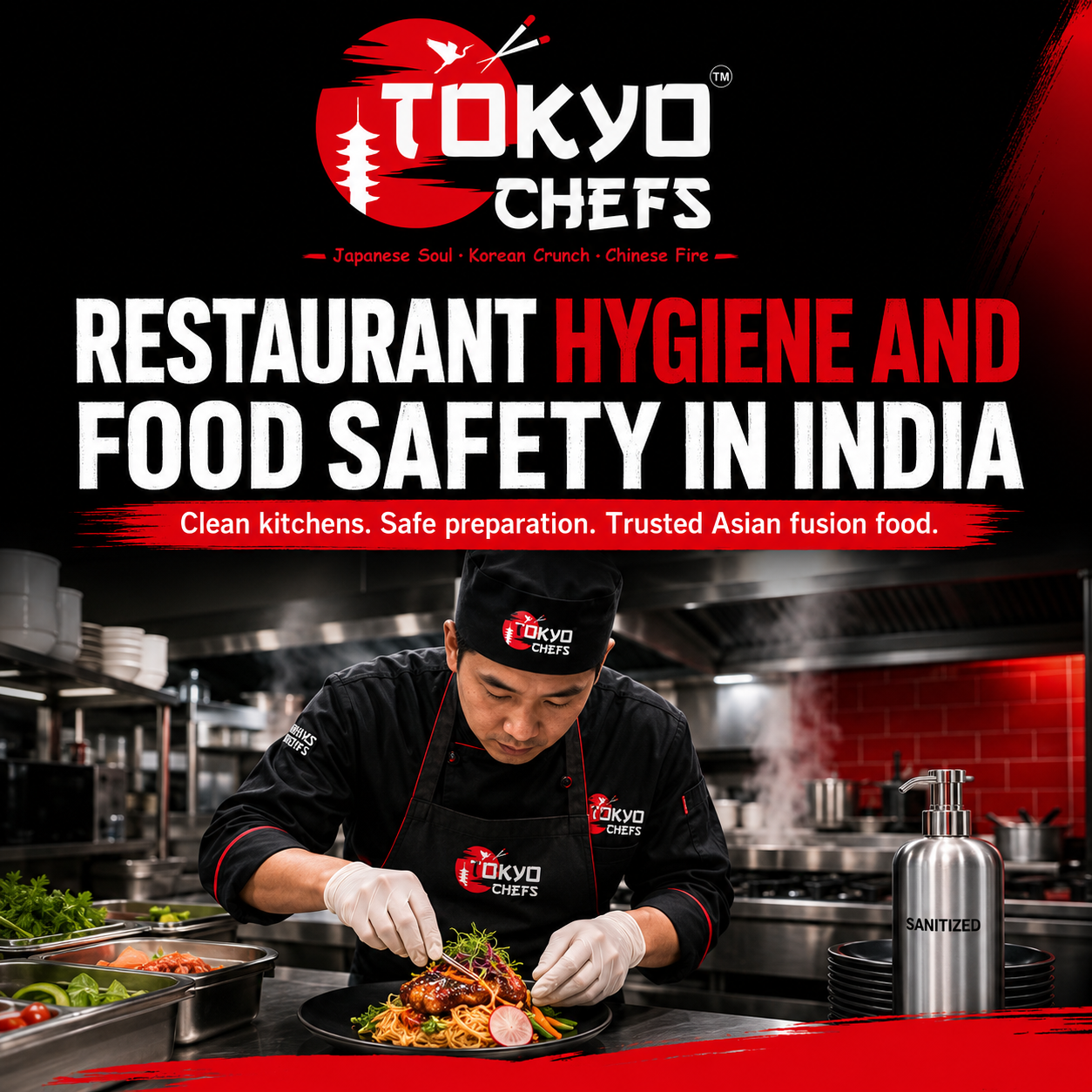
Personal hygiene of staff is equally important. Every team member should follow handwashing rules, wear clean uniforms, use gloves where required, keep hair covered and avoid handling food when unwell. A clean kitchen starts with disciplined people. Tokyo Chefs should train staff to understand that hygiene is not a formality; it is a daily responsibility.
Cleaning schedules should be clearly defined. Work tables, chopping boards, knives, fryers, woks, steamers, storage racks, refrigerators, packing counters and floors should be cleaned regularly. Opening and closing checklists should be followed every day. A kitchen that is not cleaned systematically will slowly lose control.
Delivery hygiene is also a major part of modern restaurant safety. Food should be packed in clean, food-grade packaging. Sauce cups should be sealed properly. Containers should not leak. Packing staff should handle food carefully and avoid contamination during dispatch. For many customers, the delivery box is their first direct contact with the brand, so it must reflect cleanliness and professionalism.
Food safety also supports brand reputation. One bad hygiene experience can damage customer trust, online reviews and franchise confidence. In today’s digital world, customers quickly share negative experiences. This makes preventive systems very important. Tokyo Chefs must focus on doing things right every day rather than correcting problems after complaints.
For franchise partners, hygiene standards protect the business. Clean operations improve customer retention, reduce wastage, improve staff discipline and create stronger brand value. A franchise outlet should not treat hygiene as an expense. It is an investment in customer trust.
Tokyo Chefs can build a strong reputation by communicating freshness and safety clearly. The brand should highlight fresh ingredients, house-made sauces, no frozen cooked shortcuts, clean kitchens, trained staff and standard operating procedures. Customers feel more comfortable ordering when they believe the brand is serious about hygiene.
Modern Indian customers are ready for exciting food, but they also expect responsibility. They want bold flavours without unsafe shortcuts. They want crispy Korean chicken, hot ramen, colourful bowls, bao, dimsum and wok noodles, but they also want confidence that the food is prepared with care.
Tokyo Chefs can stand out by combining Asian fusion excitement with professional food safety systems. Taste will bring customers once, but trust will bring them back repeatedly. In the restaurant business, hygiene is not separate from branding. It is one of the strongest foundations of a successful food brand.