QSR Franchise in India: Why Tokyo Chefs Is a Smart Quick-Service Restaurant Opportunity
The quick-service restaurant market in India is growing because customers want food that is fast, flavourful, clean, affordable and consistent. They do not always want a long dining experience. Many customers want to walk in, place an order, receive food quickly and enjoy a satisfying meal without delay. This is why QSR formats are becoming powerful business opportunities for food entrepreneurs.
Tokyo Chefs is well suited for the QSR model because it is built around modern Asian fusion food that can be prepared quickly with the right systems. The brand brings together Japanese-inspired bowls, Korean fried chicken, Chinese wok rice and noodles, ramen, bao, dimsum and Asian fusion starters. These categories are exciting for customers and practical for quick-service operations when recipes, portions and kitchen processes are standardised.
A successful QSR brand must have three important qualities: speed, consistency and repeat value. Customers should receive food quickly, the taste should remain the same every time, and the menu should give them enough reasons to return. Tokyo Chefs can deliver all three through strong SOPs, controlled sauces, trained staff and a menu designed for multiple customer moods.
The biggest advantage of Tokyo Chefs as a QSR franchise is menu variety. In a regular quick-service outlet, customers may find only burgers, rolls, fried chicken or Chinese food. Tokyo Chefs offers a wider Asian fusion experience. A customer can order Korean fried chicken one day, a rice bowl the next day, ramen another day, and noodles or bao on a different visit. This variety increases repeat orders.
Korean fried chicken can become a major traffic driver in the QSR format. It is crispy, saucy, bold and easy to serve in portions. Wings, boneless bites, chicken strips and sharing boxes can be prepared with standard frying methods and finished with signature sauces. Flavours like Honey Soy Garlic, Seoul Spicy, Korean BBQ and Firecracker Gochujang can create strong customer interest.
Rice bowls are perfect for quick-service restaurants because they are complete meals in one container. A Chicken Teriyaki Rice Bowl, Korean Fried Chicken Rice Bowl, Veg Katsu Curry Bowl or Mushroom Garlic Rice Bowl can be served quickly when rice, vegetables, sauces and proteins are prepared as per standard. These bowls work well for lunch, dinner, takeaway and delivery.
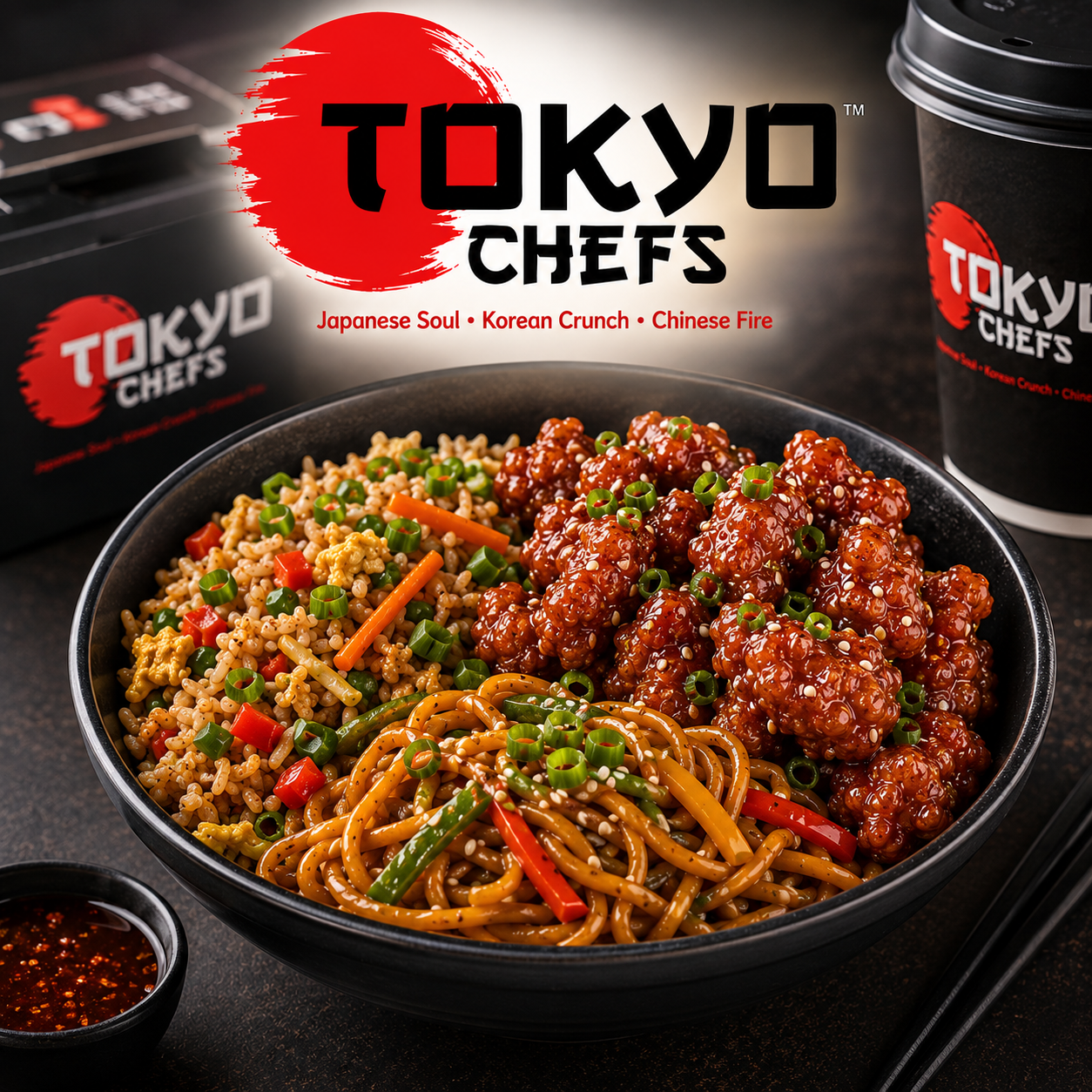
Chinese wok food also fits the QSR model beautifully. Fried rice, noodles, chilli garlic noodles, Schezwan rice, burnt garlic rice and wok starters are already loved by Indian customers. With proper mise en place, the final dish can be wok-tossed quickly during service. This gives customers hot, fresh and satisfying food without long waiting time.
Bao and dimsum add snackable variety to the QSR menu. They are useful for customers who want something light, different and easy to eat. A Korean Fried Chicken Bao, Teriyaki Mushroom Bao, Veg Dimsum or Pan-Fried Chicken Momos can become strong add-on items. These products also help increase average billing because customers may add them along with bowls, noodles or ramen.
Ramen can give the QSR format a premium touch. A hot ramen bowl feels different from regular fast food and can help Tokyo Chefs stand apart from common quick-service brands. With the right broth preparation, noodle portioning and topping system, ramen can be served efficiently while maintaining quality.
For entrepreneurs, the QSR model is attractive because it can be operated with better control compared to large full-service restaurants. A compact Tokyo Chefs outlet can focus on kitchen efficiency, counter service, takeaway, delivery and limited seating. This reduces the pressure of heavy service operations while still allowing strong sales potential.
Location plays an important role in QSR success. Tokyo Chefs can work well in high streets, malls, food courts, commercial areas, college zones, office neighbourhoods and busy residential catchments. The brand’s modern identity and attractive menu can appeal to young customers, working professionals, families and delivery users.
Packaging is also very important in a QSR format. Many customers may take food away or order online. The food should remain neat, hot and attractive. Rice bowls should not leak, fried chicken should not become soggy, bao should not get crushed, and ramen should be packed carefully. Good packaging strengthens the brand experience beyond the outlet.
A Tokyo Chefs QSR outlet should also focus on strong menu boards and simple ordering. Customers should quickly understand the categories: Korean Fried Chicken, Tokyo Rice Bowls, Ramen, Bao, Dimsum, Wok Rice and Noodles. The menu should not look confusing. Clear names, attractive photos and combo options can help customers decide faster.
Combo meals are very useful in a QSR business. Korean chicken with noodles, rice bowl with dimsum, ramen with bao, fried rice with starter and family sharing boxes can improve average order value. Customers like combos because they make ordering easy, while franchise partners benefit from better sales.
The success of a QSR franchise depends heavily on training. Staff must know exact recipes, cooking times, portion sizes, packing methods and service standards. Tokyo Chefs should operate with clear manuals, recipe cards, kitchen checklists and regular audits. This ensures that every outlet delivers the same quality.
Food cost control is another major benefit of a system-driven QSR model. When ingredients are used across multiple dishes, wastage can be reduced. Sauces can support different categories, proteins can be portioned properly, and vegetables can be used across bowls, noodles, bao and starters. This kind of menu engineering improves profitability.
Tokyo Chefs can become a strong QSR franchise because it combines current food trends with operational practicality. It is modern but not confusing. It is international but Indian-friendly. It is flavourful, colourful, quick and delivery-ready.
For customers, Tokyo Chefs offers fast Asian fusion food with bold taste and fresh appeal. For entrepreneurs, it offers a scalable quick-service restaurant opportunity with multiple sales drivers. In a market where people want speed, taste, hygiene and variety, Tokyo Chefs can become a powerful QSR brand for the new Indian food generation.