Pan-Asian Food in India: Why Tokyo Chefs Can Become a Strong Modern Restaurant Brand
Pan-Asian food has become one of the most exciting restaurant categories in India because it brings together many flavours under one roof. Instead of depending only on Chinese food, Japanese food or Korean food separately, a Pan-Asian brand can offer a wider and more interesting experience. This is exactly where Tokyo Chefs can build a powerful position in the Indian market.
Indian customers today are more open to trying global flavours. They watch food videos, follow travel content, order from delivery platforms and explore new cuisines with friends and family. However, they still prefer food that is flavourful, satisfying and suitable for their taste expectations. Pan-Asian food works because it offers international variety while still allowing bold sauces, spice, crunch and comfort.
Tokyo Chefs is designed as a Tokyo-inspired Asian fusion brand that brings together Japanese-inspired bowls, ramen, bao, dimsum, Korean fried chicken, Chinese wok rice, noodles and fusion starters. This gives the brand a wider customer appeal than a pure Japanese or Korean restaurant. A customer who may not be ready to order sushi may still enjoy Korean fried chicken, ramen, fried rice, noodles or bao. This makes the brand easier to accept across Indian cities.
The biggest advantage of Pan-Asian food is variety. Customers do not like repeating the same type of food again and again. A strong Pan-Asian menu gives them many reasons to return. One visit can be for Korean fried chicken, another for ramen, another for rice bowls, another for dimsum and another for Chinese wok noodles. This repeat value is very important for restaurant success.
For Indian families and groups, variety is even more important. When four or five people dine together, everyone may not want the same food. One person may want something spicy, another may want something crispy, another may want a full meal and another may want a light snack. Tokyo Chefs can serve all these needs through one menu. This makes it suitable for friends, families, office teams, students and delivery customers.
Pan-Asian food also has strong youth appeal. Young customers want food that feels modern and different. They are attracted to dishes like Korean fried chicken, ramen bowls, bao buns, dimsum baskets, chilli garlic noodles and Asian rice bowls because these dishes look exciting and feel fresh compared to regular fast food. Tokyo Chefs can use this appeal to build strong visibility among college students, young professionals and urban food lovers.
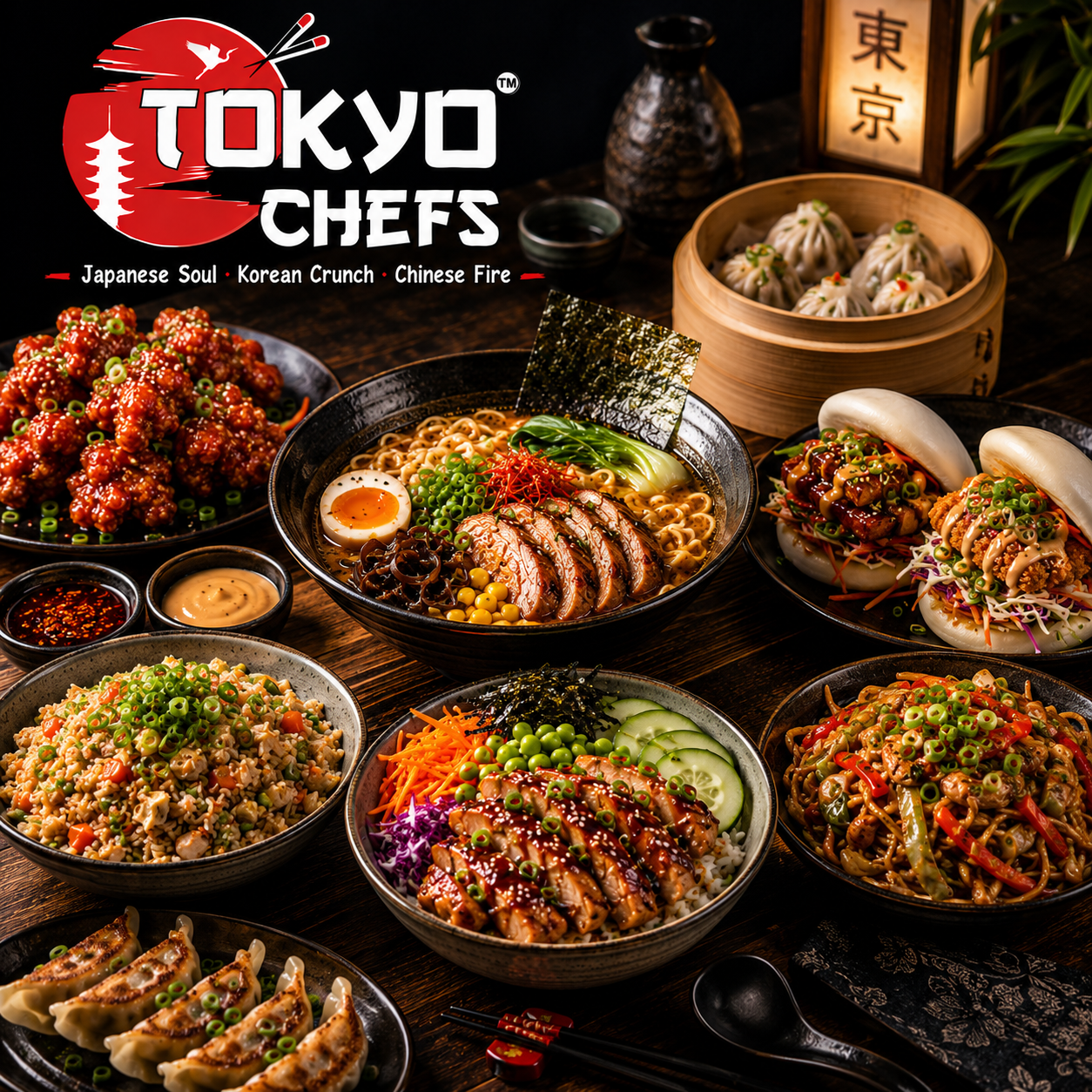
Another major strength is social media presentation. Pan-Asian food naturally looks colourful and attractive. A table with ramen, Korean fried chicken, bao, dimsum, rice bowls and wok noodles creates an excellent visual impact. This kind of food is easy to photograph and promote. In today’s restaurant market, visual appeal can directly influence customer interest and online orders.
For delivery platforms, Pan-Asian food is highly practical when designed correctly. Rice bowls, fried rice, noodles, Korean chicken bites, dimsum and bao can all be packed and delivered effectively. Customers looking for lunch, dinner, snacks or group orders can find many choices. This improves the brand’s ability to generate orders throughout the day, not only during one meal period.
Tokyo Chefs can also create strong combo opportunities. A Korean fried chicken combo with rice or noodles, a ramen and dimsum combo, a bao and beverage combo, or a rice bowl with soup can help increase average order value. Combos make decision-making easier for customers and improve sales for the outlet.
Pan-Asian food is also flexible for vegetarian and non-vegetarian customers. This is extremely important in India. A successful restaurant brand must not depend only on chicken or seafood items. Tokyo Chefs can create strong vegetarian dishes using paneer, mushroom, tofu, baby corn, cauliflower, broccoli, corn, cheese and Asian vegetables. Korean Crispy Cauliflower, Gochujang Paneer Bites, Teriyaki Mushroom Bao and Veg Katsu Curry Bowl can become attractive vegetarian options.
For non-vegetarian customers, the brand can offer Korean fried chicken, chicken ramen, chicken rice bowls, chilli chicken, seafood bowls and prawn-based wok dishes. This balance gives Tokyo Chefs the ability to serve different customer groups without losing brand identity.
The success of a Pan-Asian brand depends on clarity. The menu should be wide but not confusing. Every category must have a purpose. Korean fried chicken should create crunch and excitement. Ramen should create comfort. Rice bowls should provide complete meals. Bao and dimsum should offer snackable variety. Chinese wok dishes should deliver familiarity. When each category has a clear role, the brand becomes easier to understand.
Tokyo Chefs should not become a random multi-cuisine restaurant. It should remain focused on Asian fusion. This focus will help the brand look premium, modern and professional. Customers should immediately understand that Tokyo Chefs is about Japanese-inspired comfort, Korean crunch, Chinese wok fire and Indian-friendly Asian flavours.
For franchise partners, Pan-Asian food offers a strong business advantage. Instead of investing in a brand that depends on one limited product category, they get a wider menu with multiple revenue drivers. Korean fried chicken can drive snacks and group orders. Rice bowls can drive lunch and dinner. Wok rice and noodles can drive familiar repeat orders. Bao, dimsum and ramen can create premium appeal. This creates a balanced business model.
However, Pan-Asian food must be supported by strong systems. Sauces must be standardised, portions must be fixed, recipes must be documented and staff must be trained properly. Without discipline, the menu can become inconsistent. Tokyo Chefs has to maintain a strong operational backbone so that every outlet delivers the same taste, quality and experience.
The Indian market is ready for modern Asian fusion because customers are actively looking for something new. At the same time, they want food that is filling, flavourful and worth ordering again. Tokyo Chefs brings these expectations together in one brand.
Pan-Asian food is not only about international cuisine. It is about creating an exciting food experience that connects with modern Indian lifestyles. It is quick, colourful, flavourful, delivery-friendly and highly shareable. Tokyo Chefs can become a strong name in this category by combining creativity with consistency.
With Japanese soul, Korean crunch, Chinese fire and Indian understanding, Tokyo Chefs has the right foundation to become a powerful Pan-Asian restaurant brand for today’s India.