Cloud Kitchen Franchise in India: Why Tokyo Chefs Is Perfect for Delivery-Focused Food Entrepreneurs
Cloud kitchens have become one of the most practical food business models in India. Entrepreneurs are no longer forced to invest only in large restaurants with heavy interiors, high rent and full-service dining teams. Today, many customers discover, order and repeat food brands through online delivery platforms. This change has created a strong opportunity for focused, delivery-friendly brands like Tokyo Chefs.
A cloud kitchen works best when the menu is built for online ordering. The food must travel well, taste good after packing, look attractive in photos and be easy for customers to understand. Tokyo Chefs fits this model because it offers Asian fusion dishes that are bold, filling, colourful and delivery-friendly. Rice bowls, fried rice, noodles, Korean fried chicken, bao, dimsum and ramen can all become strong online-order products when supported by proper packaging and standard recipes.
The biggest advantage of a cloud kitchen franchise is lower investment compared to a large dine-in restaurant. A cloud kitchen does not need prime frontage, expensive interiors or a large service team. The focus is on kitchen efficiency, food quality, packaging, online visibility and repeat orders. Tokyo Chefs can work well in this format because the brand is built around strong food categories rather than heavy dining ambience.
Indian customers are already comfortable ordering food online. Office workers order lunch, students order snacks, families order dinner and groups order sharing boxes during weekends. A cloud kitchen brand must be able to serve different customer moods throughout the day. Tokyo Chefs can do this through a menu that covers snacks, meals, combos and group orders.
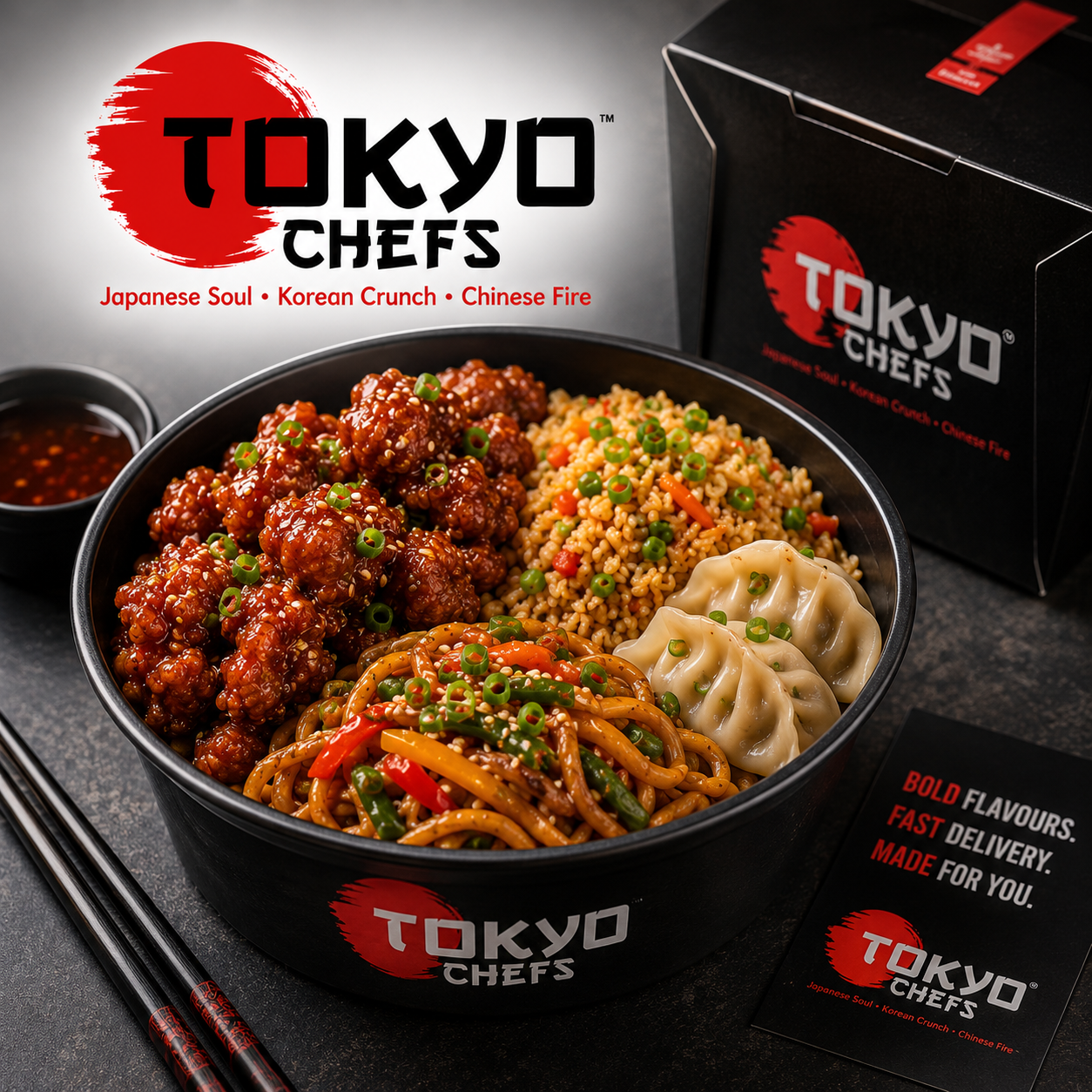
Rice bowls can become one of the strongest cloud kitchen products. They are complete meals in one container. A Korean Fried Chicken Rice Bowl, Chicken Teriyaki Bowl, Veg Katsu Curry Bowl or Mushroom Garlic Rice Bowl can serve lunch and dinner customers who want something filling and easy to eat. Bowls are also visually attractive, which helps improve online menu conversion.
Chinese wok rice and noodles are also important for cloud kitchen success. Fried rice and noodles are already among the most ordered food items in India. Tokyo Chefs can upgrade this familiar demand with dishes like Burnt Garlic Fried Rice, Kimchi Fried Rice, Chilli Garlic Noodles, Schezwan Chicken Noodles and Tokyo Street Pan-Fried Noodles. These dishes are easy to pack, easy to portion and easy to repeat.
Korean fried chicken gives the brand a strong traffic-pulling product. It is crispy, saucy and highly attractive in food photos. It can be sold as wings, boneless bites, strips, sharing boxes and combo meals. Flavours like Honey Soy Garlic, Seoul Spicy, Korean BBQ and Firecracker Gochujang can create repeat orders because customers may want to try different sauces each time.
Bao and dimsum are useful add-on products in a cloud kitchen menu. A customer ordering a rice bowl may add dimsum. A customer ordering ramen may add bao. A group ordering fried chicken may add momos or dimsum. These small-plate items help increase the average order value without making the customer feel they are ordering too much.
Packaging is one of the most important success factors for a cloud kitchen. The customer does not see the restaurant, the kitchen or the chef. The first physical experience of the brand is the food box. If the packaging is weak, leaking or messy, the customer may not order again. Tokyo Chefs packaging should protect heat, maintain texture, prevent leakage and present the food in a clean, premium way.
Each category needs a different packaging approach. Fried chicken must remain crispy. Rice bowls must stay neat and balanced. Ramen should have broth and noodles packed properly. Bao should not be crushed. Dimsum should remain soft and should be packed with dips separately. Good packaging can make Tokyo Chefs feel like a professional brand even when operating from a delivery-only kitchen.
For a cloud kitchen franchise, online menu presentation is also critical. Customers decide quickly while scrolling through delivery apps. Menu names should be clear and appetising. Korean Fried Chicken Rice Bowl, Honey Soy Garlic Wings, Chilli Garlic Chicken Noodles, Teriyaki Mushroom Bao and Spicy Kimchi Veg Ramen are easy to understand and attractive. Confusing names can reduce orders.
Food photography is another major factor. Tokyo Chefs has a natural advantage because Asian fusion food looks colourful and modern. Glossy Korean chicken, steaming ramen, bright rice bowls, soft bao, dimsum baskets and wok noodles can create strong online appeal. Good images can directly improve click-through and order conversion on delivery platforms.
A cloud kitchen franchise must also have strong operational systems. Since orders come fast during peak hours, the kitchen must be organised. Sauces should be prepared in controlled batches, vegetables should be portioned, proteins should be marinated, rice and noodles should be managed properly and staff should know exact assembly steps. Without systems, delivery delays and quality issues can damage ratings.
Ratings are extremely important in cloud kitchens. A dine-in restaurant may recover from one poor experience through service, ambience or personal interaction. A cloud kitchen depends heavily on reviews, ratings and repeat orders. Tokyo Chefs must maintain consistent taste, accurate portions, timely dispatch and proper packing to protect customer trust.
The cloud kitchen model also allows faster expansion when the brand is standardised. Once recipes, packaging, kitchen layout, training and delivery systems are fixed, Tokyo Chefs can be replicated in different cities with controlled investment. This makes it attractive for franchise partners who want to enter the food business with a modern and scalable format.
Vegetarian strength is also important for cloud kitchen success in India. Tokyo Chefs can attract vegetarian customers through Gochujang Paneer Bites, Korean Crispy Cauliflower, Veg Dimsum, Teriyaki Mushroom Bao, Tokyo Veg Fried Rice and Veg Katsu Curry Bowl. This ensures the brand does not depend only on chicken-based orders.
For non-vegetarian customers, Korean fried chicken, chicken ramen, chicken rice bowls, chilli chicken, chicken bao and chicken noodles can become strong repeat products. This balance between vegetarian and non-vegetarian options gives the brand wider market appeal.
Tokyo Chefs is perfect for the cloud kitchen franchise model because it combines modern demand with operational practicality. It offers food that is visually attractive, delivery-friendly, flavourful and suitable for multiple customer segments. With the right kitchen planning, packaging, online marketing and recipe discipline, Tokyo Chefs can become a strong delivery-focused Asian fusion brand in India.