Restaurant ROI in India: Why Tokyo Chefs Can Create Better Return Potential Through Smart Planning and Repeat Sales
Return on investment is one of the most important questions for every restaurant entrepreneur. Before investing in a food business, the investor wants to know whether the concept can generate enough sales, control costs and recover the investment within a practical time. In India, restaurant ROI depends on many factors such as location, rent, investment size, food cost, staff cost, menu pricing, delivery performance, customer repeat orders and operational discipline.
Tokyo Chefs is designed as a modern Asian fusion brand that can support better ROI potential when planned and executed properly. The brand brings together Japanese-inspired bowls, Korean fried chicken, Chinese wok rice and noodles, ramen, bao, dimsum and Asian fusion starters. This menu structure gives the business multiple sales opportunities instead of depending on only one food category.
The first factor that improves ROI is repeat demand. A restaurant cannot depend only on new customers. It must bring people back again and again. Tokyo Chefs has strong repeat potential because the menu serves different moods. A customer may order Korean fried chicken for an evening snack, a rice bowl for lunch, ramen for dinner, noodles for a quick meal and dimsum as a side dish. This variety increases the chances of regular ordering.
The second factor is daypart sales. Some food businesses perform only during lunch or dinner, while others depend mostly on evening snacks. Tokyo Chefs can attract customers across the day. Rice bowls, fried rice and noodles can perform during lunch and dinner. Korean fried chicken, bao and dimsum can work well during evening snack hours. Ramen can attract dinner and comfort-food orders. This wider daypart potential can improve total daily sales.
The third factor is delivery performance. Online ordering is now a major revenue channel for restaurants in India. Tokyo Chefs has many delivery-friendly items such as rice bowls, wok noodles, fried rice, Korean chicken bites, bao, dimsum and combo meals. If these items are packed properly and promoted well on delivery platforms, the outlet can generate orders beyond walk-in customers. Strong delivery sales can improve ROI by increasing revenue from the same kitchen.
The fourth factor is menu engineering. A restaurant with poor menu planning may make sales but still lose profit because of wastage and high food cost. Tokyo Chefs can be planned with common ingredients and standard sauces used across multiple dishes. For example, Korean sauces can be used in fried chicken, rice bowls, bao and paneer bites. Rice can support both fried rice and bowl meals. Noodles can support wok dishes and ramen-style bowls. This smart ingredient usage can reduce wastage and improve profitability.
Food cost control is essential for better ROI. Every dish must have a standard recipe and fixed portion size. A Korean Fried Chicken Rice Bowl should have a fixed quantity of rice, chicken, vegetables, sauce and garnish. A ramen bowl should have fixed broth, noodles and toppings. Fried chicken portions should be standardised by weight or count. Without portion control, profits can disappear even when sales look good.
Staff cost also affects ROI. A large full-service restaurant may need a bigger team, but Tokyo Chefs can be planned in compact and efficient formats such as QSR, food court, takeaway outlet or cloud kitchen. With proper training and SOPs, the outlet can run with a focused team. This helps control monthly expenses and improves the chance of faster return.
Rent is another major factor. Many restaurants fail because rent is too high compared to sales. Tokyo Chefs should be launched only after proper location study. The rent must match the expected revenue. A premium mall or high-street location may bring visibility, but the sales must justify the cost. In some markets, a compact QSR or cloud kitchen may generate better ROI than a large dine-in outlet.
Combo meals can strongly support ROI. A customer ordering only one item may have a lower bill value. But when the menu offers attractive combos, the average order value improves. Tokyo Chefs can create combinations like Korean chicken with noodles, rice bowl with dimsum, ramen with bao, fried rice with starter and family Asian fusion boxes. These combos make ordering easier for customers and increase billing for the outlet.
The visual appeal of Tokyo Chefs food can also support better ROI through marketing efficiency. Glossy Korean fried chicken, colourful rice bowls, steaming ramen, soft bao and dimsum baskets naturally create strong food photos and videos. Good visuals can improve online orders, social media engagement and local curiosity. When food looks attractive, customers are more willing to try the brand.
Customer reviews also influence returns. A restaurant with good ratings on Google and delivery apps can attract more orders without constantly spending heavily on advertising. Tokyo Chefs must focus on consistency, packaging, hygiene and service so that customers leave positive reviews. Good reviews can reduce marketing pressure and improve long-term sales.
For franchise partners, ROI depends not only on brand appeal but also on daily involvement. The investor must monitor sales, food cost, staff performance, customer feedback, delivery ratings, wastage and local marketing. Even a strong brand needs active management. Tokyo Chefs can provide the structure, but the outlet must be operated with discipline.
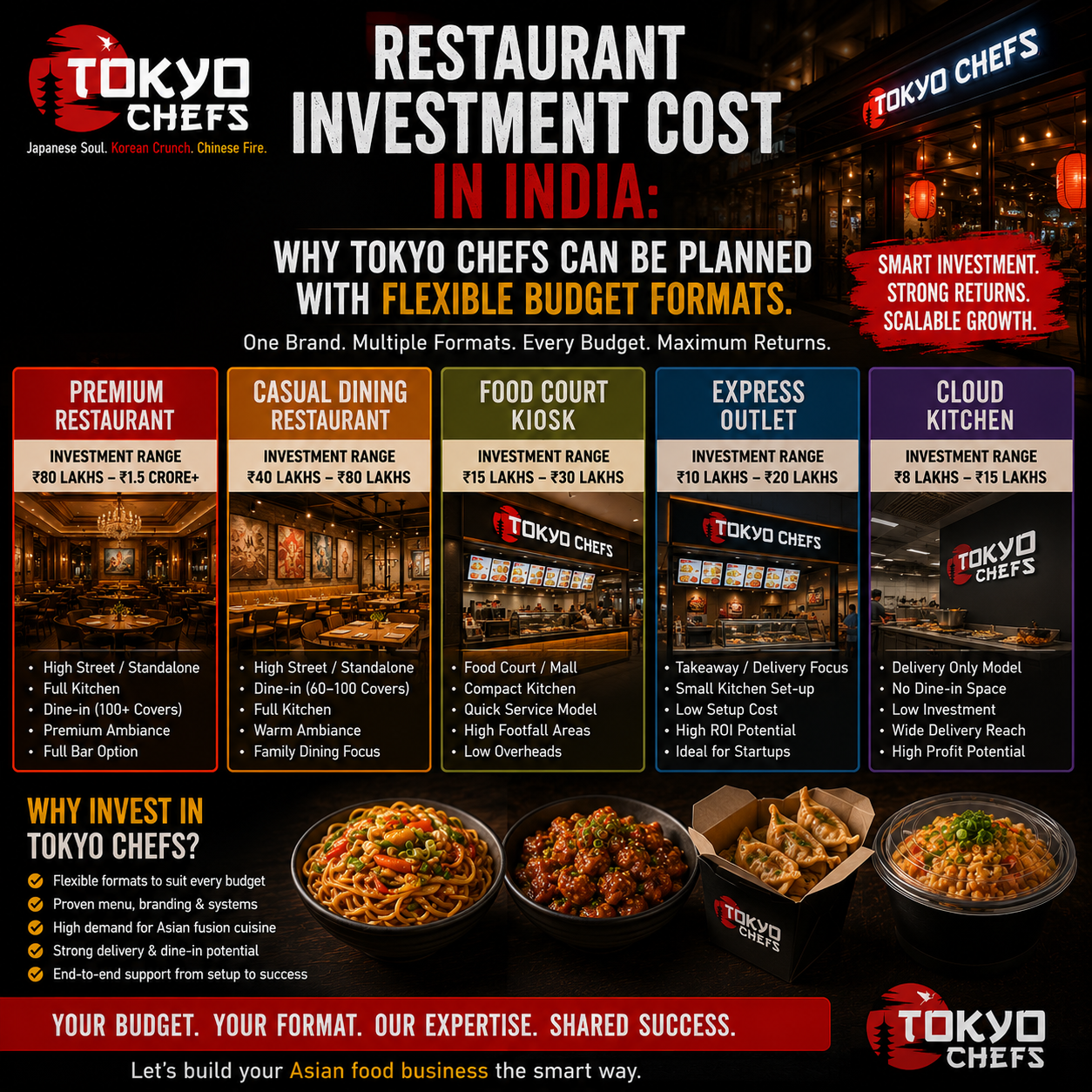
Another important ROI advantage is format flexibility. Tokyo Chefs does not need to be launched only as a large restaurant. Depending on investment and market size, it can work as a cloud kitchen, compact QSR, food court outlet, high-street takeaway model or casual dining space. This allows entrepreneurs to choose a format that matches their budget and risk appetite.
A faster ROI is possible when investment is controlled, rent is practical, food cost is managed, staffing is efficient, delivery performs well and repeat customers are built. Tokyo Chefs has the right foundation because it combines modern customer demand with operationally practical menu categories.
However, no restaurant brand should promise guaranteed returns. ROI depends on execution, market response and financial discipline. What Tokyo Chefs can offer is a strong business framework: attractive food, modern branding, scalable menu, delivery-friendly products, clear SOPs and strong customer appeal.
In India’s competitive restaurant market, better returns come from brands that understand both food trends and business systems. Tokyo Chefs can create better ROI potential by combining Japanese soul, Korean crunch, Chinese fire and Indian market intelligence in one focused Asian fusion restaurant model.