Restaurant Menu Engineering in India: Why Tokyo Chefs Can Build Better Sales Through a Smart Asian Fusion Menu
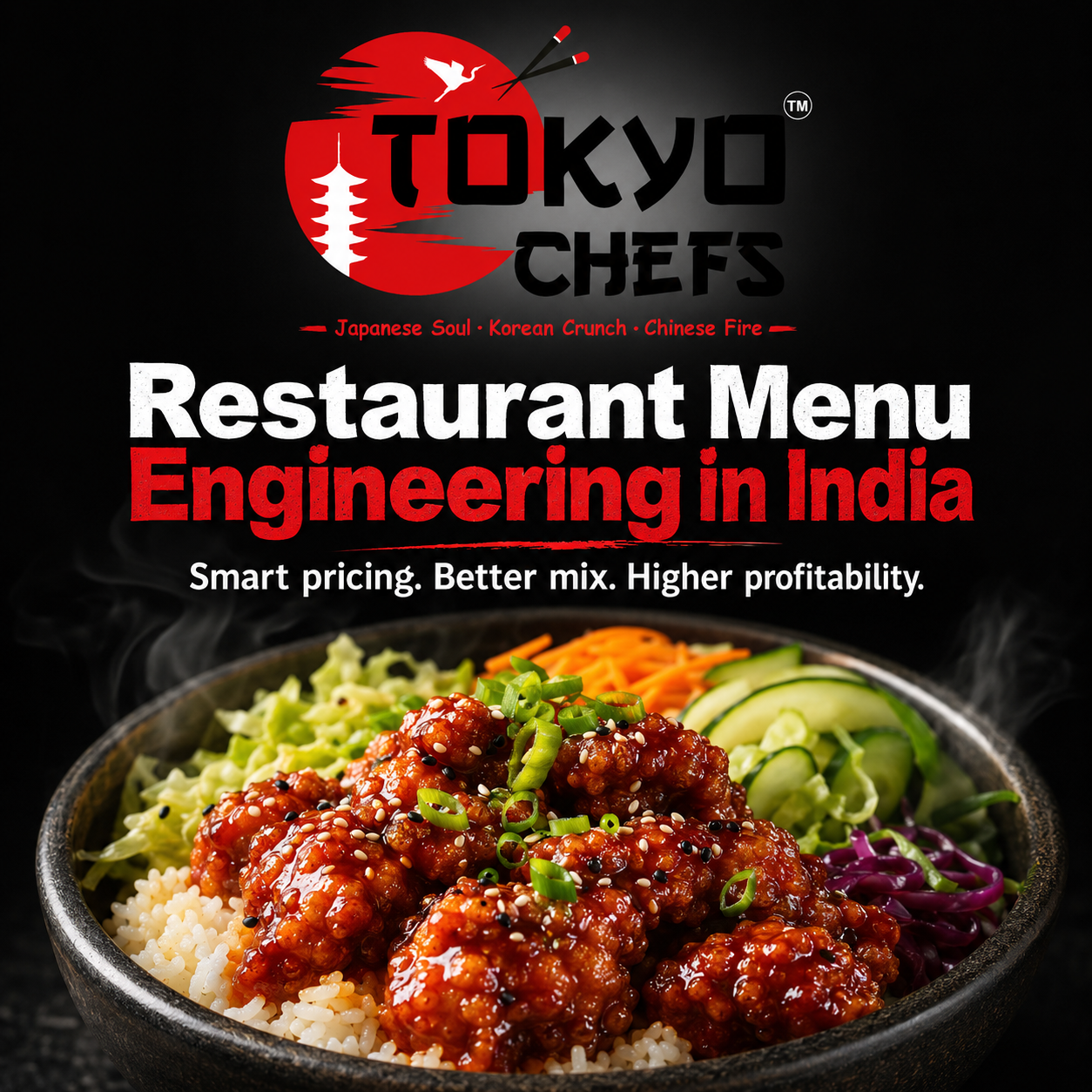
A successful restaurant menu is not just a list of dishes. It is a business tool. A well-planned menu can increase sales, control food cost, reduce kitchen confusion, improve customer satisfaction and create repeat orders. This is why menu engineering is one of the most important parts of restaurant success in India. Tokyo Chefs has strong potential because its Asian fusion menu can be designed with both customer excitement and business discipline.
Many restaurants fail because their menus are created emotionally. Owners add dishes because they personally like them, because competitors have them or because they want to show variety. The result is often a confusing menu with too many items, high wastage, slow service and inconsistent taste. Tokyo Chefs should take a smarter approach. Every dish should have a clear purpose in the menu.
Tokyo Chefs is built around Japanese-inspired bowls, Korean fried chicken, Chinese wok dishes, ramen, bao, dimsum and Asian fusion starters. These categories are attractive, modern and relevant to Indian customers. But the success of the brand depends on how these categories are structured, priced, portioned and promoted.
The first strength of the Tokyo Chefs menu is category balance. Korean fried chicken can create excitement and attract young customers. Rice bowls can drive lunch and dinner sales. Chinese wok rice and noodles can bring familiar repeat orders. Ramen can create premium comfort food appeal. Bao and dimsum can increase snack and add-on sales. This balance makes the menu suitable for multiple customer moods.
Menu engineering begins with identifying hero products. Every restaurant brand needs dishes that customers remember and return for. For Tokyo Chefs, hero items can include Korean Fried Chicken, Firecracker Gochujang Chicken, Tokyo Chicken Ramen, Korean Fried Chicken Rice Bowl, Teriyaki Mushroom Bao, Kimchi Fried Rice, Chilli Garlic Noodles and Gochujang Paneer Bites. These dishes should be highlighted strongly on the menu, website and delivery platforms.
The second important factor is ingredient cross-utilisation. A smart menu should use ingredients across multiple dishes without making the menu repetitive. For example, Korean sauce can be used in fried chicken, paneer bites, rice bowls and bao. Teriyaki sauce can be used for bowls, mushrooms and bao. Rice can support fried rice and bowl meals. Noodles can support wok noodles and ramen-style bowls. Vegetables can be used across starters, bowls, noodles and dimsum.
This kind of planning reduces wastage and improves profitability. If every dish needs completely different ingredients, the kitchen becomes expensive and difficult to manage. Tokyo Chefs can maintain menu variety while still keeping operations efficient through common sauce systems, shared ingredients and fixed preparation methods.
Portion control is another major part of menu engineering. Customers want value, but the outlet must also protect food cost. Every rice bowl should have a fixed rice portion, vegetable portion, protein portion, sauce quantity and garnish. Every fried chicken portion should have a standard weight. Every bao should have a fixed filling quantity. Every ramen bowl should have a standard broth level, noodle quantity and topping portion.
Without portion control, profitability becomes impossible to manage. One chef may add extra chicken, another may add less sauce, and another may overuse expensive ingredients. This creates inconsistent customer experience and damages margins. Tokyo Chefs must use recipe cards and training systems to avoid this problem.
Pricing also needs careful planning. A menu should have entry-level items, mid-range meals and premium options. Entry-level items help customers try the brand easily. Mid-range items drive regular orders. Premium items improve brand value and average billing. Tokyo Chefs can use this structure with snacks, bowls, combos and signature dishes.
For example, Korean chicken bites, dimsum and fried rice can work as accessible items. Rice bowls, ramen and bao combos can work as mid-range products. Seafood bowls, premium ramen and large Korean fried chicken sharing boxes can work as higher-value items. This gives customers choice while helping the outlet improve sales mix.
Combos are very important in menu engineering. Customers often prefer simple decisions. A Korean Fried Chicken with Noodles Combo, Ramen with Dimsum Combo, Rice Bowl with Bao Combo or Family Asian Fusion Box can make ordering easier. Combos also help increase average order value and allow customers to try more than one category.
For delivery platforms, combos can be especially powerful. A customer scrolling through an app may not want to study the full menu. A clear meal combo helps them decide faster. Tokyo Chefs should design combos for lunch, dinner, snacks, family orders and group sharing.
Menu descriptions also matter. A dish name should create appetite and clarity. Names like Honey Soy Garlic Wings, Korean Fried Chicken Rice Bowl, Spicy Kimchi Veg Ramen, Teriyaki Mushroom Bao and Chilli Garlic Chicken Noodles are easy to understand and attractive. Complicated names can confuse customers and reduce orders.
The menu should also highlight vegetarian strength. India has a large vegetarian customer base, and vegetarian items should not look like an afterthought. Tokyo Chefs can create strong vegetarian stars such as Gochujang Paneer Bites, Korean Crispy Cauliflower, Veg Katsu Curry Bowl, Teriyaki Mushroom Bao, Veg Dimsum and Tokyo Veg Fried Rice. These items should be promoted with the same importance as non-vegetarian dishes.
A smart menu also supports kitchen speed. During busy hours, the kitchen should be able to prepare dishes quickly without confusion. If too many items require different cooking methods, service will slow down. Tokyo Chefs can maintain speed by using prepared sauces, portioned ingredients, organised stations and clear assembly systems.
Menu engineering also helps franchise expansion. A franchise brand cannot depend on individual creativity at every outlet. The menu must be structured so that different teams can execute it consistently. Tokyo Chefs should have standard recipes, costing sheets, training manuals, plating guides, packing instructions and audit checklists.
The menu should also be reviewed regularly. Some dishes may become bestsellers, while others may not perform. Slow-moving items should be improved, replaced or removed. High-margin and high-demand dishes should be promoted more strongly. This ongoing review keeps the brand profitable and relevant.
Tokyo Chefs can become successful because its menu has strong modern appeal. But appeal alone is not enough. The menu must be engineered for sales, consistency, food cost and scalability. When every dish has a purpose, every ingredient has a role and every category supports business growth, the brand becomes stronger.
A powerful restaurant menu should excite the customer and protect the business at the same time. Tokyo Chefs has the right foundation to do both through a smart Asian fusion menu built around Japanese soul, Korean crunch, Chinese fire and Indian market understanding.