Bao Near Me: Why Tokyo Chefs Can Make Soft Asian Buns a Favourite Modern Snack
When customers search for “bao near me,” they are usually looking for something different from regular burgers, rolls, sandwiches or momos. Bao has a unique appeal because it is soft, warm, handheld and filled with bold flavours. It feels premium, modern and exciting, but at the same time it is easy to eat and easy to enjoy. This makes bao a perfect product for the new Indian food market.
Tokyo Chefs can make bao one of its most attractive Asian fusion snacks by combining soft Asian buns with Korean, Chinese and Japanese-inspired fillings. Instead of presenting bao as a complicated foreign dish, Tokyo Chefs can make it simple, flavourful and Indian-friendly. A customer should understand bao as a soft Asian bun filled with crispy, saucy and fresh ingredients.
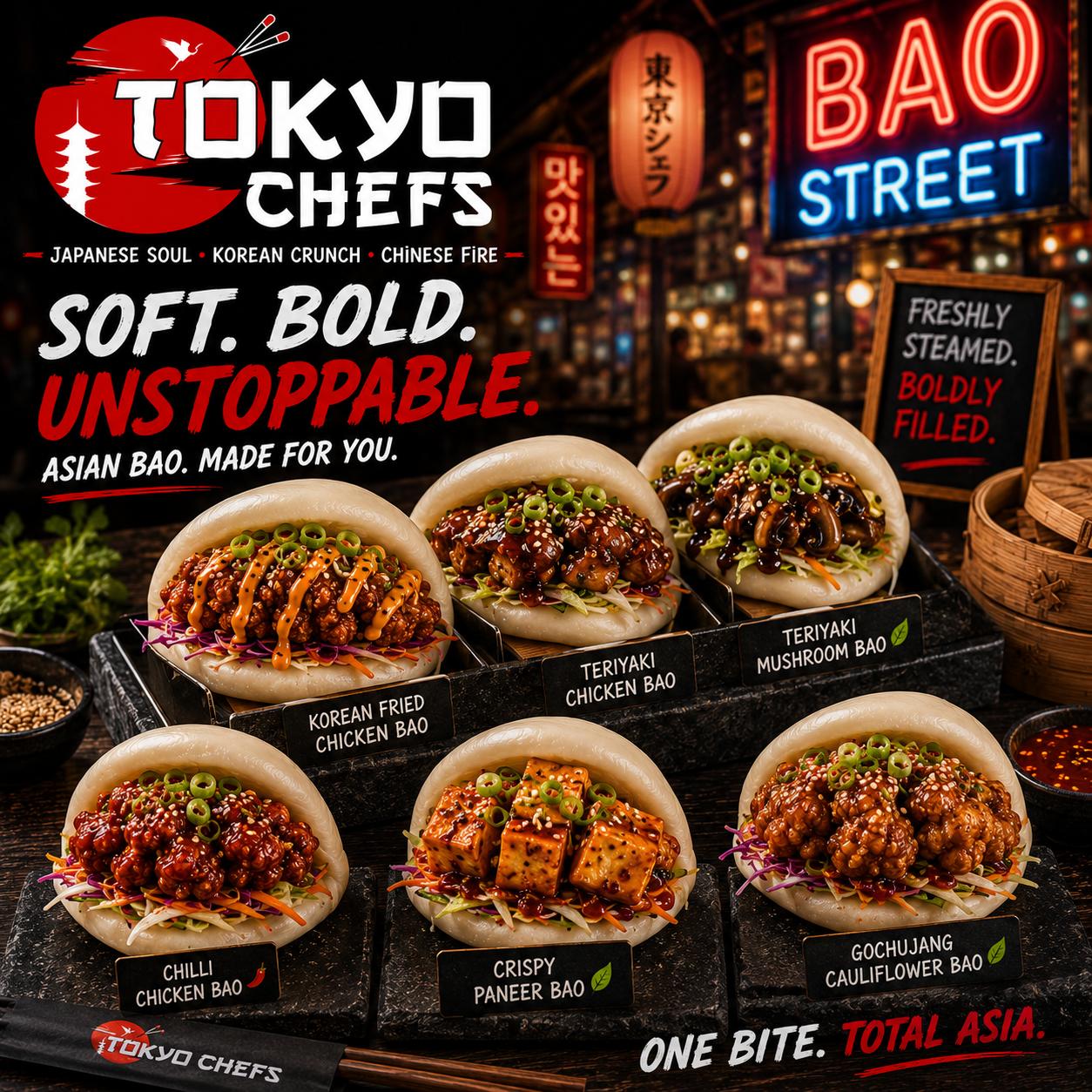
The biggest strength of bao is texture. The outer bun is soft and fluffy, while the filling can be crispy, saucy, spicy or fresh. This contrast makes every bite interesting. A Korean Fried Chicken Bao gives crunch and sauce inside a soft bun. A Crispy Paneer Bao gives vegetarian customers the same satisfaction. A Teriyaki Mushroom Bao brings a balanced sweet-savoury flavour. A Chilli Chicken Bao connects bao with familiar Indo-Chinese taste.
Bao can become a strong alternative to burgers in India. Many customers love handheld food, but they are also looking for something new. Burgers are common, rolls are common and sandwiches are common. Bao feels different. It has the same convenience of handheld eating but gives a more modern Asian experience. This makes it suitable for college students, young professionals, families and food lovers.
Tokyo Chefs can use bao as a bridge between international food and Indian taste preferences. Customers may not know traditional bao, but they understand crispy chicken, paneer, mushrooms, chilli sauce, garlic, vegetables and dips. When these familiar flavours are placed inside a soft Asian bun, the product becomes easy to accept. This is the power of fusion.
Korean Fried Chicken Bao can become a hero item. It combines two strong trends — Korean fried chicken and bao. The crispy chicken brings crunch, the sauce brings flavour and the bun brings softness. Garnishes like cucumber, spring onion, sesame, shredded vegetables and signature sauce can make the bao visually attractive and full of taste.
Vegetarian bao options are very important for India. Tokyo Chefs should not treat vegetarian bao as a basic item. Crispy Paneer Bao, Teriyaki Mushroom Bao, Gochujang Cauliflower Bao and Asian Veg Bao can become exciting products on their own. Paneer works well because Indian customers love it, while mushroom and cauliflower can absorb Asian sauces beautifully.
Bao is also highly useful for delivery and takeaway. It is compact, portion-controlled and easy to pack. Customers can order one bao as a snack or multiple bao as a meal. Bao can also be paired with dimsum, Korean chicken bites, ramen, rice bowls or noodles. This gives Tokyo Chefs many opportunities to create combos and increase order value.
For example, a bao combo with Korean chicken bites and a drink can work well for evening snacks. A ramen and bao combo can become a complete meal. A rice bowl with bao can attract customers looking for variety. These combinations make the menu stronger and help customers try more items.
The presentation of bao is another major advantage. A neatly plated bao with colourful filling, glossy sauce and fresh garnish looks excellent in photographs. It can perform strongly on Instagram, Google listings and food delivery platforms. In today’s market, a dish must not only taste good but also look good. Bao gives Tokyo Chefs a strong visual product.
However, bao must be executed carefully. If the bun becomes dry, the product fails. If the filling is too wet, the bao becomes messy. If the portion is too small, customers feel disappointed. If the sauce is not balanced, the flavour becomes weak. Tokyo Chefs must standardise the bun quality, filling quantity, sauce portion, garnish and packing method.
Freshness is very important. Bao should feel soft and warm when served. The filling should be prepared properly and should not taste stale or reheated. Sauces should be made in controlled batches and used consistently. Every outlet should follow the same process so that customers get the same bao experience every time.
Bao can also help Tokyo Chefs stand apart from ordinary Chinese restaurants. Many outlets sell momos, fried rice and noodles, but very few brands present bao as a serious menu category. When bao is placed alongside Korean fried chicken, ramen, dimsum, rice bowls and Chinese wok food, it strengthens the overall Asian fusion identity of Tokyo Chefs.
For customers searching “bao near me,” the brand must make the product easy to understand. Menu descriptions should be clear and attractive. Instead of using complicated language, Tokyo Chefs can describe bao as soft Asian buns filled with Korean fried chicken, crispy paneer, teriyaki mushroom or chilli chicken. This makes the customer comfortable and curious.
Bao is also a strong product for young customers because it feels trendy and shareable. Friends can order different bao flavours and taste them together. It works well for casual dining, food courts, mall outlets and online delivery. It gives customers a snack that feels premium without becoming too formal.
For franchise partners, bao is useful because it can be prepared efficiently with proper systems. The fillings can be standardised, sauces can be batched, garnishes can be portioned and final assembly can be done quickly. This makes bao suitable for quick-service and delivery-friendly formats.
Bao represents the kind of food modern India is ready for — global, flavourful, compact, attractive and repeatable. It is not too heavy, not too complicated and not too common. It gives Tokyo Chefs a product that can create curiosity and customer loyalty.
With the right recipes, fillings, sauces, presentation and packaging, Tokyo Chefs can make bao a favourite modern Asian snack for Indian customers. When people search for soft, flavourful and exciting bao near them, Tokyo Chefs should become the brand they remember.