Cloud Kitchen and QSR Opportunity in India: Why Tokyo Chefs Fits Modern Food Business Formats
The Indian food business is moving strongly towards compact, efficient and delivery-friendly formats. Earlier, many entrepreneurs believed that a successful restaurant needed a large dining space, heavy interiors, high staff strength and a big investment. Today, the market has changed. Customers are ordering online, choosing quick meals, exploring new flavours and supporting brands that can deliver consistent food with speed and quality. This is why cloud kitchens and quick-service restaurant formats have become powerful opportunities in India.
Tokyo Chefs is designed to fit this new food business environment. The brand is not created only for a large dine-in restaurant. It can work beautifully as a compact QSR, food court outlet, high-street takeaway model or delivery-focused cloud kitchen when planned with the right kitchen layout, menu engineering and operational systems.
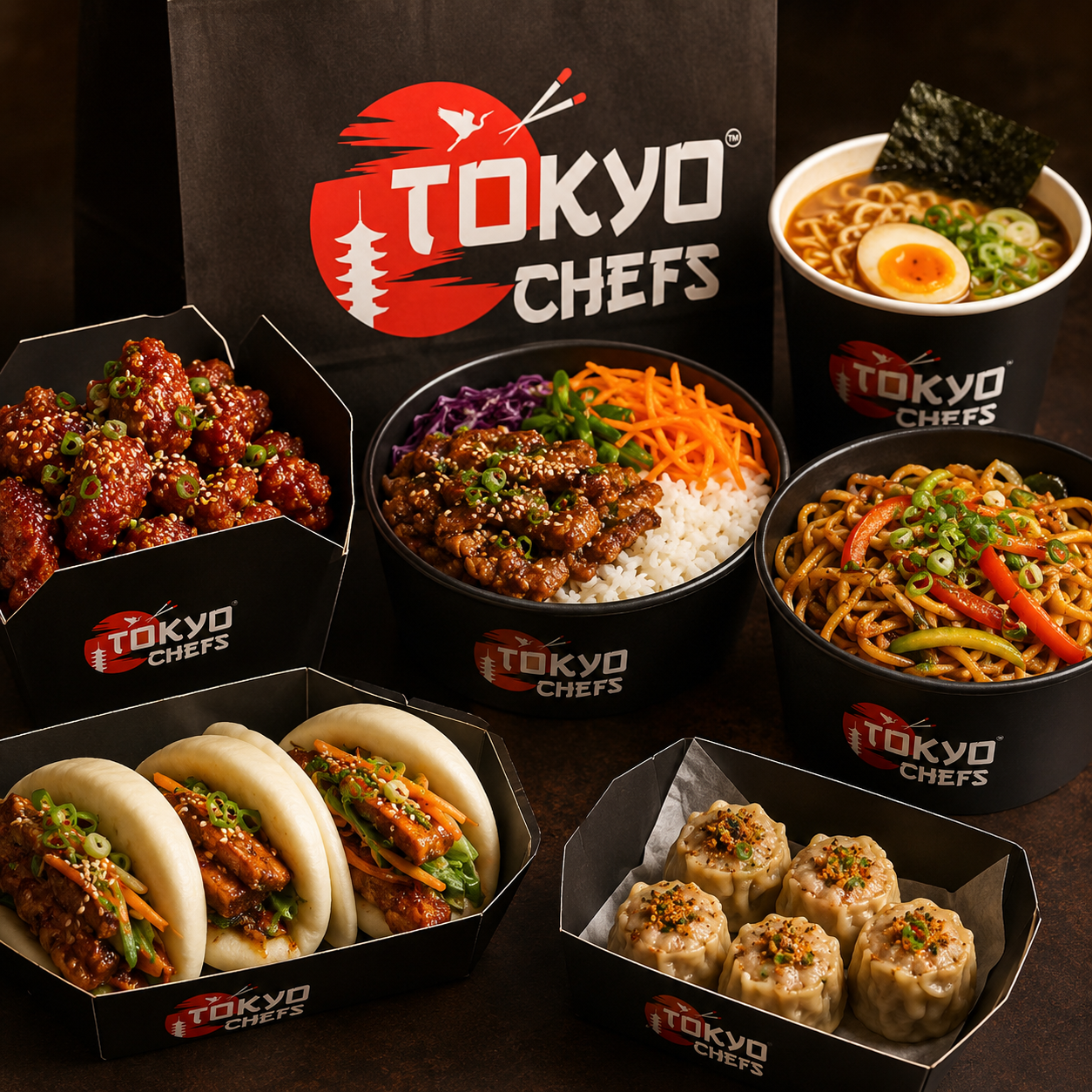
The biggest advantage of Tokyo Chefs is its menu structure. The brand combines Japanese-inspired bowls, Korean fried chicken, Chinese wok rice and noodles, ramen, bao, dimsum and Asian fusion starters. These categories are modern, attractive and highly suitable for quick preparation when recipes and processes are standardised. This makes the brand ideal for entrepreneurs who want a serious food business without unnecessarily oversized infrastructure.
Cloud kitchens are growing because customers have become comfortable ordering food online. They do not always need a dining experience. Many customers simply want tasty, fresh and well-packed food delivered to their home, office or hostel. Tokyo Chefs can serve this demand through delivery-friendly dishes such as Korean Fried Chicken Rice Bowls, Kimchi Fried Rice, Chilli Garlic Noodles, Korean Chicken Bites, Veg Dimsum, Teriyaki Mushroom Bao and Tokyo Chicken Ramen.
A good cloud kitchen brand must have food that travels well. Not every cuisine is suitable for delivery. Some dishes lose texture, become messy or fail to look attractive after packing. Tokyo Chefs has an advantage because many Asian fusion dishes can be designed for delivery. Rice bowls can be packed neatly, fried rice and noodles travel well, dimsum can be sent with dips, bao can be protected in proper boxes and Korean fried chicken can be served in crisp-friendly packaging.
Quick-service restaurant formats are also very suitable for Tokyo Chefs. In malls, food courts, high streets and commercial areas, customers usually want fast service, clear menus and strong taste. They may not have time for a long dining experience. A Tokyo Chefs QSR can serve complete bowl meals, Korean fried chicken combos, wok noodles, bao and dimsum quickly while still giving customers a premium Asian fusion feel.
The QSR format works because the menu can be engineered for speed. Sauces can be prepared in controlled batches, rice and noodles can be prepped as per standard, vegetables can be portioned, proteins can be marinated and toppings can be organised. During service, the final dish can be assembled or wok-tossed quickly. This reduces waiting time and improves customer satisfaction.
For entrepreneurs, compact formats reduce risk. A large restaurant comes with high rent, high interior cost, large staff requirements and heavier maintenance. A cloud kitchen or compact QSR can control investment better. Tokyo Chefs can be planned with a focused kitchen, limited but strong menu, efficient equipment and smart manpower. This makes the business more practical for many Indian cities.
However, compact does not mean casual or unprofessional. A small kitchen still needs strong systems. In fact, a compact kitchen needs even more discipline because space is limited. Every ingredient, sauce, container, equipment and workflow must be planned properly. Tokyo Chefs must focus on kitchen efficiency so that the outlet can handle dine-in, takeaway and delivery orders without confusion.
Another strength of Tokyo Chefs in cloud kitchen and QSR formats is daypart flexibility. Some brands perform only during lunch or dinner. Tokyo Chefs can attract orders across different times of the day. Rice bowls and ramen can work for lunch and dinner. Korean fried chicken and bao can work for evening snacks. Fried rice, noodles and combos can work for office meals and family orders. Dimsum and small plates can support add-on sales.
The brand also has strong online appeal. In a cloud kitchen business, customers may never see the outlet. They judge the brand through name, logo, food photos, menu descriptions, ratings, packaging and reviews. Tokyo Chefs has a strong visual advantage because Asian fusion food looks colourful and exciting. Glossy Korean chicken, steaming ramen, colourful bowls, bao and dimsum can create strong food delivery platform images.
Packaging becomes a key part of success. A delivery customer experiences the brand through the box before tasting the food. Tokyo Chefs packaging should feel clean, modern and premium. It should protect heat, prevent leakage, maintain texture and present the food neatly. Good packaging can turn a simple delivery order into a branded experience.
For cloud kitchens, menu clarity is very important. Customers scrolling through delivery apps decide quickly. Menu names should be simple, attractive and easy to understand. Korean Fried Chicken Rice Bowl, Honey Soy Garlic Wings, Tokyo Veg Fried Rice, Chilli Garlic Chicken Noodles, Korean Chilli Momos and Teriyaki Mushroom Bao are clear names that can create instant interest.
Combo meals can further strengthen the QSR and cloud kitchen model. A rice bowl with dimsum, Korean chicken with noodles, ramen with bao, or fried rice with starter can improve average order value. Customers like combos because they make ordering easier. Franchise partners like combos because they improve sales and help promote multiple menu categories.
Tokyo Chefs also has strong vegetarian potential, which is essential for Indian markets. A cloud kitchen cannot depend only on chicken-based dishes. Gochujang Paneer Bites, Korean Crispy Cauliflower, Veg Katsu Curry Bowl, Teriyaki Mushroom Bao, Veg Dimsum and Tokyo Veg Fried Rice can attract vegetarian customers and families.
The biggest success factor for cloud kitchen and QSR formats is consistency. Since customers may order repeatedly online, they expect the same taste every time. If the sauce changes, portion changes or packing quality drops, ratings can fall quickly. Tokyo Chefs must depend on SOPs, recipe cards, training and audits to maintain quality across outlets.
Tokyo Chefs fits modern food business formats because it is colourful, scalable, delivery-friendly and operationally practical. It gives entrepreneurs the ability to enter the growing Asian fusion category without depending only on large dine-in spaces. With the right location, kitchen design, packaging, digital presence and food quality, Tokyo Chefs can perform strongly as a cloud kitchen, QSR or hybrid outlet.
The future of restaurant business in India belongs to brands that can serve great food with speed, consistency and smart investment. Tokyo Chefs is built for that future.